Wednesday, July 27, 2011

Internal Doc Reveals GMAC Filed False Document in Bid to Foreclose #p2 #tcot

from http://www.propublica.org/article/gmac-mortgage-whistleblower-foreclosure?utm_source=socmed&utm_medium=FB&utm_campaign=gmac

GMAC, one of the nation's largest mortgage servicers, faced a quandary last summer. It wanted to foreclose on a New York City homeowner but lacked the crucial paperwork needed to seize the property.

GMAC has a standard solution to such problems, which arise frequently in the post-bubble economy. Its employees secure permission to create and sign documents in the name of companies that made the original loans. But this case was trickier because the lender, a notorious subprime company named Ameriquest, had gone out of business in 2007.

And so GMAC, which was bailed out by taxpayers in 2008, began looking for a way to craft a document that would pass legal muster, internal records obtained by ProPublica show.

"The problem is we do not have signing authority—are there any other options?" Jeffrey Stephan, the head of GMAC's "Document Execution" team, wrote to another employee and the law firm pursuing the foreclosure action. No solutions were offered.

Three months later, GMAC had an answer. It filed a document with New York City authorities that said the delinquent Ameriquest loan had been assigned to it "effective of" August 2005. The document was dated July 7, 2010, three years after Ameriquest had ceased to exist and was signed by Stephan, who was identified as a "Limited Signing Officer" for Ameriquest Mortgage Company. Soon after, GMAC filed for foreclosure.

An examination by ProPublica suggests this transaction was not unique. A review of court records in New York identified hundreds of similar assignment documents filed in the name of Ameriquest after 2008 by GMAC and other mortgage servicers.

The issue has attracted growing scrutiny in recent months as bloggers, consumer attorneys and media outlets have identified what appears to be part of a pattern of questionable assignments filed across the country.

GMAC was at the center of what became known as the robo-signing scandal, which broke last fall after revelations that mortgage servicing employees had produced flawed documents to speed foreclosures. GMAC and other banks have acknowledged filing false affidavits in which bank officials claimed "personal knowledge" of the facts underlying thousands of mortgages. But GMAC and the servicers say they've since tightened their procedures. They insist that their records were largely accurate and the affidavits amounted to errors of form, not substance.

The issues surrounding the Ameriquest loan and others like it appear to be more serious.

"This assignment of mortgage has all of the markings of GMAC finding that it lacked a needed mortgage assignment in order to foreclose and just making it up," said Thomas Cox, a Maine foreclosure defense attorney.

In New York, it's a felony to file a public record with "intent to deceive."

"It's fraud," said Linda Tirelli, a consumer bankruptcy attorney. "I want to know who's going to do a perp walk for recording this."

No criminal charges have been filed in the robo-signing cases.

Asked by ProPublica about the document, GMAC acknowledged Stephan did not have authority to sign on behalf of Ameriquest. The bank said it is still planning to push ahead with foreclosure on the homeowner, who remains in the property.

Company spokeswoman Gina Proia said an internal review last fall into "suspected documentation execution issues" had flagged the loan as problematic and that GMAC is "determining what needs to be done in order to receive the necessary authorization." 

"We will determine and complete the necessary steps to remediate and proceed with foreclosure," Proia said. 

GMAC also declined a request from ProPublica to interview Stephan.

Another GMAC document obtained by ProPublica shows that in at least one recent incident, GMAC employees were still discussing the possibility of fabricating evidence needed to facilitate a foreclosure.

The company once again lacked a document that would show it had been assigned the mortgage. Since the lender was defunct and no assignment had ever been made, GMAC again seemed to be stuck. But the employee proposed in June of this year that GMAC file a sworn statement that the assignment had once existed but had been lost. It's unclear if such an affidavit was ultimately provided to a court.

Records also show that GMAC has continued to rely on documents signed by the very employee at the center of the robo-signing scandal—Jeffrey Stephan, the same employee who also signed the Ameriquest document in 2010. Stephan acknowledged in sworn testimony last year that he had been signing 400 documents each day, a revelation that helped kick off the scandal. According to a former employee and a consumer attorney, Stephan still works at GMAC, though he has been transferred to a different unit.

GMAC said it is still pursuing foreclosures based on assignments signed by Stephan.

"There is no reason or requirement to 'withdraw' valid assignments of mortgage that happened to have been signed by Mr. Stephan," said GMAC spokeswoman Proia, because there's "no requirement that [the assignment] be signed by a person with knowledge of any particular facts." All that mattered, she said, was that the signer had received the proper authority.

Banks have little reason to worry about their documents being challenged, since homeowners rarely contest foreclosure actions. In a filing with the New Jersey Supreme Court, GMAC said that of the more than 4,000 foreclosures it has handled in the state only about 4 percent of homeowners had contested the action.

When homeowners do challenge banks' documentation for foreclosures, they can have success. Late last week, the Vermont Supreme Court threw out a foreclosure case handled by GMAC due, in part, to a flawed assignment document signed by Stephan.

"It is neither irrational nor wasteful to expect the foreclosing party be actually in possession of its claimed interest," the court said, "and have the proper supporting documentation in hand when filing suit."

Since last fall, GMAC has added staff, increased training and added new procedures, said Proia. But some of those new hires have come from firms themselves accused of filing false foreclosure documents.

One manager at GMAC, Kevin Crecco, moved there from a position at the Law Offices of David Stern in Florida after the firm drew scrutiny from the state's attorney general for allegedly filing forged documents. Stern's office, once among Florida's biggest foreclosure law firms and labeled a "foreclosure mill" by critics, ceased operations earlier this year.

An internal organization chart from this spring for GMAC's foreclosure department lists Crecco as a manager overseeing roughly two dozen employees. GMAC declined to make Crecco available for an interview. He hasn't been accused of any wrongdoing.

Mortgage servicers like GMAC continue to be set up like assembly lines, with members of its "Document Execution" team responsible for signing documents. The organizational chart shows two "Document Execution" teams of 13 employees each.

The employees are tasked with, among other things, signing affidavits attesting to the accuracy of the basic facts of the loan, such as the mortgage amount, outstanding fees, etc. Affidavits are a necessary step to foreclosure in many states where banks have to go to court to seize a home.

During the robo-signing scandal, GMAC admitted that employees signing affidavits didn't verify the underlying facts. The bank says it has fixed the problems.

But consumer attorneys said that while GMAC's processes have improved, they haven't corrected basic flaws with their process.

Cox, the attorney who questioned Stephan last year as part of a foreclosure case, said employees on the "Document Execution" team still aren't truly checking the accuracy of the underlying information. Rather than digging for the original documents, employees on the team look at the numbers given by a GMAC database and double-check the math.

If the employee "just looks at a computer screen, that's not sufficient in my view," said Cox. He said he would soon be challenging affidavits GMAC recently filed in court.

Consumer attorneys also said the systems that servicers rely on are consistently plagued with inaccuracies, making a more thorough verification of the information necessary. "These days, homeowners are being forced to save every receipt, every letter, every statement, so that one day they can prove that their payment history is accurate and the bank is wrong," said Jim Kowalski, a consumer attorney in Florida.

GMAC's Proia said the company's procedures—which amount to a review of information in the company's computerized databases—were sufficient to file affidavits.


Boehner' debt plan getting no meaningful support from GOP presidential candidates #p2 #tcot

from http://www.dailykos.com/story/2011/07/27/999465/-Boehner-debt-plan-getting-no-meaningful-support-from-GOP-presidential-candidates?via=blog_1

Depending on which accounts you read, John Boehner is either asking for unity on his bill or telling his caucus to "get your ass in line."

Whichever it is, the GOP's 2012 presidential field isn't doing it:

So far, former Utah governor Jon Huntsman is the only major GOP candidate to come out in favor of the package. And former Minnesota governor Tim Pawlenty late Tuesday joined Reps. Michele Bachmann and Rep. Ron Paul in announcing their opposition to it. Meanwhile, former Massachusetts governor Mitt Romney and businessman Herman Cain are keeping their powder dry.

And of course, Jon Huntsman is a major GOP candidate only in the eyes of the Beltway media. So what we have is Tim Pawlenty trying to compete with Michele Bachmann in Iowa, while Mitt Romney tries to decide on the first of the four or five positions he will ultimately take on this issue.

Yesterday, Jed Lewison noted that among major conservative groups, only the Chamber of Commerce and Americans for Tax Reform support Boehner's plan, while Club for Growth, Americans for Prosperity, FreedomWorks and several others are opposed to it, and concluded that:

It's no surprise that the two groups Boehner has on his side are establishment Republican groups with a greater interest in corporate lobbying than in right-wing ideology. And each of the groups that that position themselves as being closer to grassroots conservatives opposes the measure. That gives you a sign of where this thing is headed: down.

In the presidential field, Mitt Romney is equivalent to the Chamber of Commerce—corporate establishment rather than right-wing ideology. The fact that he won't come out and support the bill, even for a few minutes, shows how weak Boehner's position is.


Boehner: ‘A Lot’ Of Republicans Want To Force Default, Create ‘Enough Chaos’ To Pass Balanced Budget Amendment #p2 #tcot

from http://thinkprogress.org/economy/2011/07/27/280754/boehner-gop-want-chaos-debt-ceiling/

House Speaker John Boehner (R-OH) said today that some members of his own caucus who are refusing to agree to a compromise debt ceiling deal are hoping to unleash "chaos" and thus force the White House and Senate Democrats to make bigger concessions than they're already offering. As many as 40 House Republicans, especially Tea Party members and freshmen, have demanded nothing short of changing the Constitution to include a balanced budget amendment before they would vote to raise debt ceiling, even though that has zero chance before the U.S. faces potential default on Aug. 2.

Speaking on conservative radio host Laura Ingraham's show this morning, Boehner agreed that failing to raise the limit before the deadline would be devastating, and said the "chaos" plan won't work when asked by Ingraham what's motivating the recalcitrant Republicans:

BOEHNER: Well, first they want more. And my goodness, I want more too. And secondly, a lot of them believe that if we get passed August the second and we have enough chaos, we could force the Senate and the White House to accept a balanced budget amendment. I'm not sure that that — I don't think that that strategy works. Because I think the closer we get to August the second, frankly, the less leverage we have vis a vis our colleagues in the Senate and the White House.

Listen here: http://youtu.be/Jict4tt_bok

Boehner offers only political calculus for why this Tea Party plan wouldn't work. He completely ignores the devastating effect a downgrade in U.S. debt and potential default would have on the American people and the global economy, who happen to be innocent bystanders to this high-stakes hostage negotiation.

Many on the left have been arguing all along that some Republicans are more interested in extorting concessions than addressing the debt issue, and are willing to blow up the economy if they don't get their way — it's refreshing, if troubling, to see that their leader agrees.


Practitioners, Policymakers Welcome IRS Change on Innocent Spouse Relief

from http://www.journalofaccountancy.com/Web/20114398.htm

Tax practitioners, legislators and taxpayer advocates said the IRS' announcement that it would no longer require taxpayer requests for innocent spouse equitable relief under IRC § 6015(f) to be made within two years of the beginning of collection activity was a long overdue change.


"It's not surprising at all; the sad thing is that this could have been predicted," said Carlton Smith, clinical associate professor of law in the Benjamin N. Cardozo School of Law in New York City and director of the school's Tax Clinic. "I think it has been almost inevitable that there were going to be cases ending up with horrible fact patterns, mostly involving women, amid compelling circumstances that would make it almost impossible for the IRS to maintain its position," Smith said.


On Monday, the IRS issued Notice 2011-70, saying it will now consider taxpayer requests for relief from liability on jointly filed returns under section 6015(f) at any time consistent with other applicable statutes of limitation.


In so doing, the Service renounced its long-held position, set out in Treas. Reg. § 1.6015-5(b)(1), that despite the lack of a statutory time limit in section 6015(f), the same two-year limit for filing applies to it as under the provisions for general innocent spouse relief of section 6015(b) and separation of liability under section 6015(c). Three appellate courts have upheld the rule, although the Tax Court has several times held the regulation invalid. In the notice, the IRS said it will remove the two-year limit from the regulation, and it described how taxpayers may seek relief in the interim.


Smith credited the work of National Taxpayer Advocate Nina Olson, who, at least since 2006, has made revising the rule a top priority in her semiannual reports to Congress on tax policy affecting taxpayers and taxpayer burdens. Olson issued a statement Monday commending IRS Commissioner Doug Shulman for stepping in to change the policy, as well as local advocates in the Taxpayer Advocate Service, taxpayers and members of Congress who advocated the change.


In an IRS news release, Shulman said the need for the change had become clear to him in recent months.


"This change is a dramatic step to improve our process to make it fairer for an important group of taxpayers," he said. "We know these are difficult situations for people to face, and today's change will help innocent spouses victimized in the past, present and the future."


The IRS said in the notice it would take appropriate action consistent with the notice with respect to pending litigation. On Monday, citing the notice, a government lawyer filed a request for a dismissal of a case in the Second Circuit Court of Appeals of Heather L. Coulter (docket no. 10-680), for whom Smith is co-counsel. Smith said he expects similar action will be taken in pending cases in several other circuits and in the Tax Court, where the most recent circuit court win by the IRS has been remanded.


Smith said he estimates, based on inquiries by Olson—the IRS does not track the number—that the IRS receives about 50,000 innocent spouse requests annually, of which Monday's change affects probably about 2,000 each year.


In April, 49 U.S representatives led by Reps. Pete Stark, D-Calif., and Jim McDermott, D-Wash., wrote Shulman to urge the review that led to the change. In addition, Senate Finance Committee chairman Max Baucus, D.-Mont., and committee members Tom Harkin, D-Iowa, and Sherrod Brown, D-Ohio, also wrote to Shulman in April asking for the IRS review. In a press release, Rep. McDermott called the IRS's decision "a victory for fairness."


Also in April, Reps. Michele Bachmann (R-Minn.) and Michael Fitzpatrick (R-Pa.) reintroduced a bill to revise section 6015(f) to say that a request under it carries no time limit.


Amazon’s Market Cap Passes $100 Billion

from http://techcrunch.com/2011/07/27/amazons-market-cap-passes-100-billion/?utm_source=feedburner&utm_medium=email&utm_campaign=Feed%3A+Techcrunch+%28TechCrunch%29


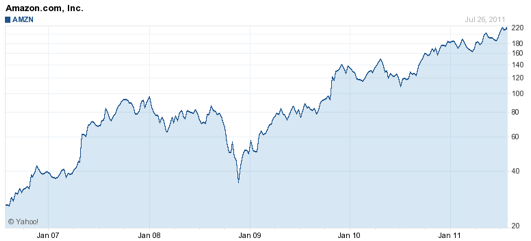
After reporting stronger than expected second quarter earnings yesterday, Amazon has passed $100 billion in market cap this morning. The company's shares are currently trading at around $225 per share, giving the e-commerce giant a $101.81 billion market cap.

Amazon's sales for the quarter neared $10 billion, an increase of 51 percent from the same quarter in 2010. Net income decreased 8% to $191 million in the second quarter, or $0.41 per diluted share, compared with net income of $207 million, or $0.45 per diluted share, in second quarter 2010. But despite this decline in net income, Amazon was able to beat analyst expectations.

And the company's stock is rallying this morning, thanks to bullish investors.

Shares reached as high as $227.20 today, which is an all-time high for the company. To put the $100 billion market cap in perspective, Amazon has surpassed HP's valuation, which is currently $76 billion. eBay's market cap is $43 billion.


Can The Government Use Location Data To Hunt Us Down?

from http://techcrunch.com/2011/07/27/the-seemingly-unanswerable-question-can-the-government-use-location-data-to-hunt-us-down/?utm_source=feedburner&utm_medium=email&utm_campaign=Feed%3A+Techcrunch+%28TechCrunch%29

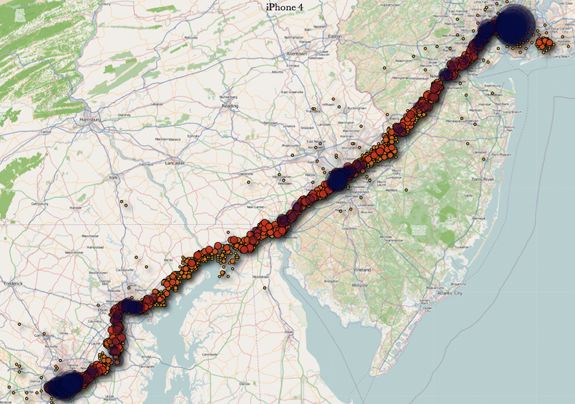
mapped

You remember Locationgate, right? It was that massive national scandal that left both Apple and Google at the center of our discontent, after two German researchers discovered that the iPhone tracks and stores location data automatically. The scandal has spurred numerous investigations into where we should draw the line when it comes to location tracking, and one in particular garnered the wisdom of the NSA's Matthew Olsen, National Counterterrorism Center lead and NSA general counsel.

At a confirmation hearing in the Senate Select Committee on Intelligence, Olsen answered the question we had all been asking for a while: can the government use our location data to track us?

The WSJ reports that Senator Ron Wyden of Oregon posed the question, asking if The Man can "use cell site data to track the location of Americans inside the country." Olsen's response was ambiguous at best, although he seemed to suggest that the government does in fact have that authority: "There are certain circumstances where that authority may exist," said Olsen. "It is a very complicated question."

Well that just about clears it up then, doesn't it? Remember the good old days when the feds actually had to do a little work to find suspected criminals? Good times. Anyways, since Olsen's answer fell short of any sense of clarity, the "intelligence community" — another awesomely vague reference — intends to write up a memo that will actually answer the question. A California senator, Dianne Feinstein, asked that the memo be completed by the time the committee reconvenes in September.

The question posed by Senator Ron Wyden inherently steps into the Fourth Amendment's territory. The Fourth Amendment promises protection and privacy for both the citizen and his or her possessions against unreasonable searches. Whether or not that search is unreasonable is based on the searchee's subjective and objective beliefs about their own privacy (among other things).

A criminal may subjectively believe that his old cigarette butt is private property but that won't stop Law & Order detectives from using it to nab DNA evidence. However, if society as a whole collectively believes that the expectation of privacy is reasonable, then evidence collected from the search must be thrown out. In other words, if dirty secrets aren't kept in a private place, you can say goodbye to your privacy protection.

But are phones private? We lock them up with passwords, and we certainly don't "borrow" each other's phones the way we do clothes, books, and DVDs. So how can data from our private phones be used to track us down?

The reason Locationgate was so upsetting to so many people is because it shattered the perception that our phones are locked down little safes that hold and guard all of our secrets. But Apple and Google both maintain that the data collected is encrypted and anonymous if sent back to the company, which again confirms our original thoughts: our phones are private and it is only reasonable to expect privacy when it comes to your phone.

Hopefully, that memo will read the same.


"Healthy Meal": The Right-Wing Media Rages Against Healthier Happy Meals #p2 #tcot

Media Matters for America

"Healthy Meal": The Right-Wing Media Rages Against Healthier Happy Meals

http://mediamatters.org/research/201107270013

Following McDonald's decision to offer "more nutritionally-balanced" Happy Meals and First Lady Michelle Obama's praise of its move, the right-wing media jumped to attack McDonald's for supposedly bending to the will of the "fat police" and making Happy Meals "less happy." However, numerous studies show that childhood obesity leads to significant health problems, and moreover, McDonald's reportedly made their decision in part so that parents could feel "less guilty" about buying their kids Happy Meals.

McDonald's Makes Apple Slices A Regular Part Of "Happy Meal"

McDonald's "Announces Commitments To Offer Improved Nutrition Choices." From a July 26 McDonald's press release:

Today, McDonald's USA president Jan Fields announced the company's "Commitments to Offer Improved Nutrition Choices." The comprehensive plan aims to help customers -- especially families and children -- make nutrition-minded choices whether visiting McDonald's or eating elsewhere.

Menu changes underway include the addition of more nutritionally-balanced choices that meet McDonald's reputation for great taste and affordability, along with an increased focus on providing nutrition information that enable customers and employees to make simple, informed menu decisions.

"McDonald's will always try to do the right thing, and we know we can help make a difference in our communities," said Jan Fields, president, McDonald's USA. "The commitments we're announcing today will guide the future evolution of our menu and marketing." [McDonald's, 7/26/11]

CNN.com: "Happy Meal Gets A Makeover." A July 26 CNN.com article reported:

McDonald's Happy Meals are getting their fat and calories trimmed, the fast food giant announced Tuesday.

The seemingly ubiquitous Happy Meals that have drawn the ire of health advocates and have been blamed for contributing to childhood obesity, will carry apple slices, reduced portion of french fries and a choice of beverage, including new fat-free chocolate milk and 1% low-fat white milk.

The core of the Happy Meal will remain the same as kids will still get fries (a smaller portion) and a choice of a hamburger, cheeseburger or chicken nuggets.   All beverages, including milk, fruit juice, water and soda, continue to be options for the Happy Meal.

The changes are scheduled to begin September with the hopes that all 14,000 restaurants will transition to the new Happy Meals by the first quarter of 2012. [CNN.com, 7/26/11]

First Lady Praised McDonald's For "Providing More Fruit And Reducing The Calories In Its Happy Meals." On July 26, First Lady Michelle Obama issued the following statement regarding McDonald's announcement:

McDonald's is making continued progress today by providing more fruit and reducing the calories in its Happy Meals.  I've always said that everyone has a role to play in making America healthier, and these are positive steps toward the goal of solving the problem of childhood obesity.  McDonald's has continued to evolve its menu, and I look forward to hearing about the progress of today's commitments, as well as efforts in the years to come. [Let's Move, 7/26/11]

Right-Wing Media Outlets Rally Against Healthy Alternative, Blame First Lady For Change

Fox Responds To McDonald's "Fat Police" With Outrage Over "Happy" Being Lost In "Healthy Meal."  During the July 26 edition of Fox News' Fox & Friends, the co-hosts repeatedly attacked McDonald's for voluntarily making Happy Meals healthier, claiming, in the words of Steve Doocy, that "there's about to be no more happy in your Happy Meals" because "they're being replaced with the healthy meal." [Fox News, Fox & Friends, 7/26/11 via Media Matters]

HotAir: "McDonald's To Revamp Happy Meals Because You're Too Dumb To Watch What Your Kids Eat." In a July 26 HotAir post titled, "McDonald's to revamp Happy Meals because you're too dumb to watch what your kids eat," AllahPundit wrote:

Fair headline? Well, until now, when ordering a Happy Meal you had a choice between the traditional burger and fries and a more nutritious but-mom-I-don't-want-that burger with apple slices. But it turns out most of you were choosing "poorly."

And so your choice had to be taken away. [HotAir, 7/26/11]

The Blaze: "Michelle Obama Might Have Taken The 'Happy' Out Of McDonald's Happy Meals." A July 26 post to Glenn Beck's website The Blaze said:

A child could once feel excitement over hearing a parent utter those beautiful words: "honey, we're going to McDonald's for a Happy Meal." But those carefree days are over and that sense of childhood wonderment and abandon is about to be seriously curbed by a new McDonald's policy that cuts an order of fries in half, throws apple slices, raisins and pineapple chunks around as if they were ketchup, and just generally makes Happy Meals "healthier," and, less happy. And even though the apples are reportedly not well-received by customers, guess what? McDonald's is forcing the fruit in its Happy Meals anyway. Whether you want it or not.

And what's more, politics, perhaps even the White House itself, could be to blame.

[...]

So after all the years of satisfied customers "lovin' it," it is political pressure, including First Lady Michelle Obama's war on childhood obesity, that reportedly forced McDonald's hands.

[...]

McDonald's: another casualty in the Nanny State's war on personal choice, or is the fast food giant bringing this on themselves? Will the new, and perhaps not improved, McDonald's menu affect your decision to patronize the long-time burger institution? [The Blaze, 7/26/11]

Weasel Zippers: "McDonald's Caves In To Michelle Obama," "Because Parents Are Too Stupid To Make Their Own Decisions." A July 26 Weasel Zippers post titled, "McDonald's Caves In To Michelle Obama's Food Police, French Fries In Happy Meals Take A Back Seat To Apple Slices" went on to add "because parents are too stupid to make their own decisions." [Weasel Zippers, 7/26/11]

Malkin Holds "Unhappy Meal" Photoshop Contest. In a July 26 post to her website, Michelle Malkin wrote:

With the approval of First Nutritionist Michelle Obama, McDonald's is getting rid of caramel apple dip, reducing the French fries portion, and adding more apples to its Happy Meals offerings.

Mrs. Obama expects more.

[...]

They won't rest until the Happy Meal has undergone the total Berkeley makeover.

Next up: Goodbye, hamburgers. Hello, tofu burgers.

Goodbye, fruit juice boxes. Hello, kale/wheatgrass boxes.

I'm running out to Sonic before right now before they get their grubby Nanny State hands on my cheesy tots and cherry limeade.

Malkin's post went on to say: 

Okay, all my wonderful Photoshop friends and readers. ... Send me your best Unhappy Meal makeover images and I'll post the best! Winner of the contest gets a Sonic gift card.

The following images are responses from Malkin's readers displayed within her post:

1

2

3

4

5

[MichelleMalkin.com, 7/26/11]

But Studies Show The Importance Of Healthy Eating Choices For Children

USDA: "More Than One-Third Of Children" Are Overweight Or Obese. A January 31 press release by the United States Department of Agriculture (USDA) stated:

Agriculture Secretary Tom Vilsack and Secretary of the Department of Health and Human Services (HHS) Kathleen Sebelius today announced the release of the 2010 Dietary Guidelines for Americans, the federal government's evidence-based nutritional guidance to promote health, reduce the risk of chronic diseases, and reduce the prevalence of overweight and obesity through improved nutrition and physical activity.

Because more than one-third of children and more than two-thirds of adults in the United States are overweight or obese, the 7th edition of Dietary Guidelines for Americans places stronger emphasis on reducing calorie consumption and increasing physical activity. [USDA, 1/31/11, emphasis in original]

Health Risks For Overweight Or Obese Children Include Heart Disease, Type 2 Diabetes, High Blood Pressure. According to the Center for Disease Control (CDC), there are numerous health risks both during childhood and later in life stemming from childhood obesity. From the CDC:

What are the consequences of childhood obesity?

Health risks now

  • Childhood obesity can have a harmful effect on the body in a variety of ways. Obese children are more likely to have-
    • High blood pressure and high cholesterol, which are risk factors for cardiovascular disease (CVD). In one study, 70% of obese children had at least one CVD risk factor, and 39% had two or more.2
    • Increased risk of impaired glucose tolerance, insulin resistance and type 2 diabetes.3
    • Breathing problems, such as sleep apnea, and asthma.4,5
    • Joint problems and musculoskeletal discomfort.4,6
    • Fatty liver disease, gallstones, and gastro-esophageal reflux (i.e., heartburn).3,4
    • Obese children and adolescents have a greater risk of social and psychological problems, such as discrimination and poor self-esteem, which can continue into adulthood.3,7,8

Health risks later

  • Obese children are more likely to become obese adults.9, 10, 11   Adult obesity is associated with a number of serious health conditions including heart disease, diabetes, and some cancers.12
  • If children are overweight, obesity in adulthood is likely to be more severe.13

[CDC, accessed 7/27/11]

CDC: 17 Percent "Of Children And Adolescents Aged 2-19 Years Are Obese"; "1 of 7 Low Income" Children Aged 2-4 "Is Obese." According to the CDC, "Approximately 17% (or 12.5 million) of children and adolescents aged 2-19 years are obese." Additionally, "1 of 7 low-income, preschool-aged children is obese." From the CDC:

2009 State Prevalence Among
Low-Income Children Aged 2 to 4 Years

states

2007--2009 County Obesity Prevalence Among
Low-Income Children Aged 2 to 4 Years

counties 

[CDC, accessed 7/27/11]

Overweight And Obese Children Are More Likely To Become Obese Adults. From First Lady Michelle Obama's "Let's Move" campaign's website:

Obese children may experience immediate health consequences which can lead to weight-related health problems in adulthood. Obese children and teens have been found to have risk factors for cardiovascular disease (CVD), including high cholesterol levels, high blood pressure, and abnormal glucose tolerance. In a sample of 5-to 17-year-olds, almost 60% of overweight children had at least one CVD risk factor and 25% of overweight children had two or more CVD risk factors. In addition, studies have shown that obese children and teens are more likely to become obese as adults. [Let's Move, accessed 7/27/11]

And McDonald's Happy Meal Change Was The Result Of A Business Decision

LA Times: "Business Strategy For McDonald's Is To Make Parents Feel Less Guilty" About Buying Happy Meals. From a July 25 Los Angeles Times article:

The business strategy for McDonald's is to make parents feel less guilty about feeding fast food to their children, so they'll become more frequent customers.

"People tell us they want to feel good about visiting us regularly, about the food options that we serve, and want to visit us even more often," [President of McDonald's USA Jan] Fields said. [LA Times, 7/25/11]

Contact:
FOX & Friends

Fox & Friends
http://twitter.com/foxandfriends

Contact:
Michelle Malkin

writemalkin@gmail.com
http://twitter.com/michellemalkin

You can help support our work: donate to Media Matters for America.

Saturday, July 9, 2011

Half of US social program recipients believe they "have not used a government social program" #p2 #tcot

from http://www.boingboing.net/2011/07/08/half-of-us-social-pr.html


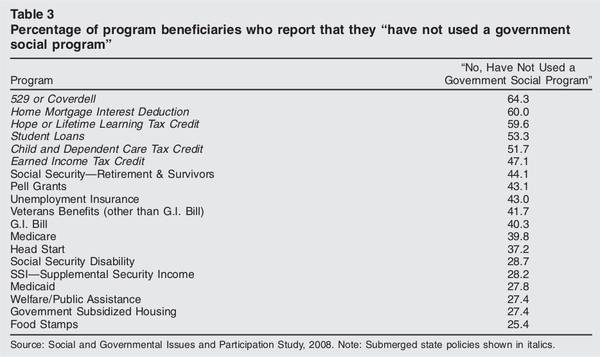
"Reconstituting the Submerged State: The Challenges of Social Policy Reform in the Obama Era," a paper by Cornell's Clinton Rossiter Professor of American Institutions Suzanne Mettler features this remarkable chart showing that about half of American social program beneficiaries believe that they "have not used a government social program." It's the "Keep your government hands off my Medicare" phenomena writ large: a society of people who subsist on mutual aid and redistributive policies who've been conned (and conned themselves) into thinking that they are rugged individualists and that everyone else is a parasite.

Reconstituting the Submerged State: The Challenges of Social Policy Reform in the Obama Era (PDF) (Thanks, Fipi Lele!)


Friday, July 8, 2011

SPLC filed a lawsuit against Alabama's new, draconian anti-immigrant law #p2 #tcot

from http://www.splcenter.org/get-informed/news/splc-launches-federal-court-challenge-to-alabama-s-discriminatory-anti-immigration?ondntsrc=MBQ110770AIQ&newsletter=newsgen-20110708

The Southern Poverty Law Center led a coalition of civil rights groups today in filing a federal lawsuit challenging Alabama's extreme anti-immigrant law, passed last month and inspired by Arizona's notorious SB 1070.

The Alabama law, HB 56, empowers law enforcement officials to check the immigration status of individuals, makes it a crime to knowingly transport an undocumented immigrant and requires school officials to determine the immigration status of students and their parents, among other provisions. It is set to take effect Sept. 1.

The class action lawsuit charges the immigration law is unconstitutional on multiple grounds. It will subject residents of Alabama – including countless U.S. citizens and non-citizens with permission to be in the United States – to racial profiling as well as unlawful interrogations, searches, seizures and arrests that violate the Fourth Amendment.

The filing of the lawsuit was announced at the Civil Rights Memorial Center in downtown Montgomery, where the SPLC's office is located.

"We have filed this lawsuit today because Alabama's immigration law is blatantly unconstitutional," said SPLC Legal Director Mary Bauer. "This law revisits the state's painful racial past and tramples the rights of all Alabama residents. It should never become the law of the land."

The lawsuit also charges that the law's provisions regarding education will deter children from immigrant families from enrolling in public schools and will bar many non-citizens lawfully within the country from attending public colleges or universities in Alabama. These provisions violate the Equal Protection Clause of the U.S. Constitution and are contrary to U.S. Supreme Court precedent. Other provisions deny individuals access to the state's judicial system due to their immigration status – depriving them of due process guaranteed by the Constitution.

Alabama's anti-immigrant law, which is the fifth such state law to pass, is the most extreme in the nation. So far, none of these discriminatory state laws have been fully implemented due to legal challenges.

"Alabama has brazenly enacted this law despite the clear writing on the wall: Federal courts have stopped each and every one of these discriminatory laws from going into effect," said Cecillia Wang, director of the ACLU Immigrants' Rights Project. "Local Alabama communities and people across the country are shocked and dismayed by the state's effort to erode our civil rights and fundamental American values."

The lawsuit was filed in the U.S. District Court for the Northern District of Alabama on behalf of several organizations and individuals across the state that will be adversely affected by the law. The coalition includes the Southern Poverty Law Center, the American Civil Liberties Union, the ACLU of Alabama, the National Immigration Law Center, the Asian Law Caucus and the Asian American Justice Center.


rest at http://www.splcenter.org/get-informed/news/splc-launches-federal-court-challenge-to-alabama-s-discriminatory-anti-immigration?ondntsrc=MBQ110770AIQ&newsletter=newsgen-20110708

Caterpillar Inc. used offshore subsidiaries to avoid $2 billion in U.S. taxes; demotes whistleblower #p2 #tcot

from http://www.bloomberg.com/news/2011-07-08/caterpillar-accused-of-demoting-tax-whistleblower.html

Caterpillar Inc. used offshore subsidiaries in Switzerland and Bermuda to avoid about $2 billion in U.S. taxes from 2000 to 2009, boosting its earnings through a "tax and financial statement fraud," according to a Caterpillar executive's lawsuit.

The company, the world's largest construction-equipment maker, sold and shipped spare parts globally from an Illinois warehouse while improperly attributing at least $5.6 billion of profits from those sales to a unit in Geneva, according to the suit filed by Daniel J. Schlicksup. He was a global tax strategy manager for Caterpillar from 2005 to 2008.

Schlicksup, 49, sued in U.S. District Court in Peoria, Illinois, in 2009, claiming he was moved to a job that limits his career opportunities because he complained to superiors that the "Swiss Structure" ran afoul of U.S. tax rules. He's seeking a court order to give him back his old job and prevent any retaliation. He also seeks stock options that he claims were wrongly withheld as well as legal fees and punitive damages.

His lawsuit, which calls the structure a "tax dodge," followed a request for job protection he filed with the U.S. Department of Labor under provisions of the Sarbanes-Oxley Act, court records show. The law bars retaliation against corporate whistleblowers. Schlicksup declined to comment for this story. His attorney, Dan O'Day, declined to say whether Schlicksup has taken his concerns to the Internal Revenue Service.

Complies With Laws

Caterpillar spokesman Jim Dugan said the company has engaged in no wrongdoing, and its attorneys said in a court filing that Schlicksup's transfer wasn't a demotion. Dugan declined to comment on the suit's specific allegations, saying Caterpillar "complies with applicable tax laws and regulations."

It could be difficult to prove the company underpaid U.S. taxes, said Reuven Avi-Yonah, director of the international tax law program at the University of Michigan Law School in Ann Arbor. IRS officials have had only mixed success recovering large settlements in corporate income-tax cases, and "$2 billion would be an extraordinarily large recovery," said Edward Kleinbard, a law professor at the University of Southern California in Los Angeles and a former corporate tax attorney at Cleary Gottlieb Steen & Hamilton LLP.

Peoria-based Caterpillar, which reported year over year earnings growth exceeding 250 percent in each of the last two quarters, is among several U.S. multinationals asking Congress to end U.S. corporate income taxes on profits earned abroad. The company had $3.7 billion of pretax income last year on $42.6 billion in revenue, 68 percent of which came from offshore.


rest at http://www.bloomberg.com/news/2011-07-08/caterpillar-accused-of-demoting-tax-whistleblower.html

Surprise! The big bad bailout is paying off #p2 #tcot from fortune

from http://finance.fortune.cnn.com/2011/07/08/surprise-the-big-bad-bailout-is-paying-off/

FORTUNE -- The bailout of the financial system is roughly as popular as Wall Street bonuses, the federal budget deficit, or LeBron James in a Cleveland sports bar. You hear over and over that the bailout was a disaster, it cost taxpayers a fortune, we didn't really need it, it didn't work, it was a failure. It has become politically toxic, which inhibits reasoned public discussion about it.

But you know what? The bailout, by the numbers, clearly did work. Not only did it forestall a worldwide financial meltdown, but a Fortune analysis shows that U.S. taxpayers are coming out ahead on it -- by at least $40 billion, and possibly by as much as $100 billion eventually. This is our count for the entire bailout, not just the 3% represented by the massively unpopular Troubled Asset Relief Program. Yes, that's right -- TARP is only about 3% of the bailout, even though it gets about 97% of the attention.

A key reason for the rescue's profitability is that the Federal Reserve System has already turned over more than $100 billion of bailout-related income to the Treasury, and is on track to turn over $85 billion more this year and next. That's not something most people include in their math. On the negative side, we're including what may be the first overall cost calculation of a special tax break that's worth tens of billions of dollars to four big bailout recipients. And, of course, we've analyzed reports from the Congressional Budget Office, the Treasury, the Federal Deposit Insurance Corp., and other sources.

We'll get to the detailed numbers in a bit. But for now, we'd like to remind you why the bailout exists. The revisionist idea that the bailout is the problem -- rather than excesses in the financial system -- is simply stunning to those of us who watched the financial crisis surface in 2007, when two Bear Stearns hedge funds speculating in mortgage securities collapsed, and reach a crescendo in September 2008, when Lehman Brothers went bankrupt. Many in the financial world applauded Washington's decision to let Lehman go under -- but that applause was quickly replaced by fear as unanticipated consequences of the bankruptcy surfaced.

Lehman's collapse touched off a terrifying run on money market mutual funds when the Reserve Primary Fund announced it could pay holders only 97¢ on the dollar because of Lehman-related losses. Savers who'd considered money funds as safe as federally insured bank deposits stampeded for the exits, pulling out hundreds of billions of dollars. It took federal guarantees of more than $3 trillion of money market fund balances -- bailout! -- to stop this modern-day bank run.

Some hedge funds that used Lehman's London office as their "prime broker" had their assets frozen, setting off a run on prime brokers Goldman Sachs (GS) and Morgan Stanley (MS) as U.S. hedge funds pulled out their assets to avoid getting frozen if either firm failed. Goldman and Morgan were close to running out of cash when the government saved them by making them bank companies with access to the Fed's lending facilities. Bailout! Bailout! GE Capital (GE) was having trouble rolling over its borrowings, and was rescued by a government guarantee program. Bailout! Then there was American International Group, the now infamous AIG (AIG), which required a 12-figure rescue.

Had Goldman, Morgan Stanley, GE Capital, AIG, and several giant European banks not gotten bailouts and instead failed, even capital-rich J.P. Morgan Chase (JPM) would have gone under, because it wouldn't have been able to collect what these and other players owed it. There would have been trillions in losses, worldwide panic, missed payrolls, and quite likely the onset of Great Depression II. That's why we needed a bailout. And why we got it.

Now that we've relived the history, let's take a stroll through the numbers. Things have turned out far better than expected because the massive government intervention calmed the markets, and Uncle Sam had to make good on only a tiny fraction of the obligations that taxpayers guaranteed. Uncle Sam bought assets at what turned out to be near-bottom prices amid the market panic; the value of Sam's holdings has since soared. The more than $14 trillion of government investments, securities purchases, and loan guarantees -- of which TARP never amounted to more than $411 billion (although it was authorized to spend up to $700 billion) -- stabilized the whole financial system.

So how has this worked out for U.S. taxpayers?

Let's take the costs first.

· The biggest expense by far comes from the rescue of mortgage finance giants Fannie Mae and Freddie Mac. Or, actually, the rescue of their debtholders -- stockholders have been essentially wiped out.

The $130 billion cost is the money the government has put into Fannie and Freddie ($154 billion) to cover their losses, less the dividends ($24 billion) Fannie and Freddie have paid on the government's preferred stock. The Treasury and the nonpartisan Congressional Budget Office both expect that $130 billion figure to shrink; Fannie and Freddie have been adding profitable business since 2008, and it should begin to outweigh their losses from the housing bubble. But we're being conservative and counting the full $130 billion.

· Then there's a $35 billion tax expense, which no one else has included in bailout calculations. It's our analysis (with assistance from tax guru Bob Willens) of the taxpayer cost of special IRS rulings that allowed TARP recipients AIG, Citigroup, (C) General Motors, (GM) and Ally Financial (formerly GMAC) to use their tax losses in full, rather than being subject to "change in control" rules designed to stop companies from being taken over for their tax losses. GM got both an IRS ruling and a provision in the 2008 economic stimulus legislation to preserve its losses despite having gone bankrupt.

We estimate that without special treatment, the companies could have used only about $4 billion of their $43 billion of "deferred tax assets" to offset federal income taxes. Now they can use them all. We're estimating the taxpayer cost at $35 billion rather than the full $39 billion because it's not clear when -- or whether -- the companies will earn enough to use all the losses. (The tax breaks have presumably increased the prices of the shares in those companies that the government owns or has sold, because they have made the companies more valuable to investors. That means the higher share prices have decreased the cost of the bailout, though it's impossible to quantify by how much.)

· We're counting the cost of TARP as $19 billion, based on the most recent update by the Congressional Budget Office. That includes $13 billion spent to help homeowners restructure their mortgages, plus projected losses on AIG, GM, and Chrysler, offset by gains in some of TARP's other holdings, primarily in banks. The $19 billion estimate is a big improvement from the CBO's first estimate, $189 billion, in January 2009. That's because TARP's investments have fared better than expected, and its total outlays have been shrinking rapidly. They're down to $104 billion, according to the Treasury, from their aforementioned high of $411 billion.

rest at http://finance.fortune.cnn.com/2011/07/08/surprise-the-big-bad-bailout-is-paying-off/

Memo to Senator Orrin Hatch: The poor can't "dig any deeper" #p2 #tcot

from http://www.examiner.com/political-buzz-in-new-york/memo-to-senato-orrin-hatch-the-poor-can-t-dig-any-deeper

Senator Hatch, you claim that the poor who qualify for subsidies because they can't afford things like health care should "dig deeper". You say that "the top 1 percent of the wealthy already pay 38% of all income tax. The top 10 percent are paying 70 % of all income tax." I suggest that you recheck your facts Senator particularly when it comes to the large corporates. Citibank paid a tax rate16.9%, less than half of its corporate tax rate of 36% and the on top of it got rid of 5,000 jobs last year. Johnson and Johnson paid a tax rate of 21.3% and got rid of 8,000 jobs over the last 5 years. General Electric paid almost "0" in taxes and got rid of 17,000 employees. Here's a suggestion Senator Hatch. Like President Obama is proposing, close all the loopholes like tax havens, accounting tricks, corporate tax tricks, stock manipulation, and then the top 10% that you refer to could "dig deeper". 

You want the poor to dig deeper - but into what? The disparity between the rich and poor has never been wider driven by low, stagnant, or disappeari­ng wages for the middle class over the last 30 years. To make matters worse, the last decade of lower effective tax rates for the rich and big corporations has not led to an explosion of jobs but instead has robbed the government of much needed revenue and helped create millions of more impoverished American families leading us to where we are today. The American Dream no longer exists for many as more and more jobs are being exported overseas. But yet you want the poor to "dig deeper". 

People who are working low-paying or minimum wage jobs or who don't have a job and qualify for subsidies because they can't afford healthcare cannot "dig deeper". People who are working two jobs to meet the rent and cost of living increases cannot "dig deeper".  Single mothers working two jobs while attending weekend nursing classes cannot "dig deeper". 


Thursday, July 7, 2011

Clinton: GOP War On Voting Is Most Determined Disenfranchisement Effort Since Jim Crow #p2 #tcot

from http://thinkprogress.org/justice/2011/07/07/262400/clinton-war-on-voting-jim-crow/

Speaking yesterday at the annual Campus Progress convention, former President Bill Clinton called out the GOP's state by state efforts to make it harder to vote — a war on voting designed almost entirely to reduce the number of Democrats who cast ballots:

I can't help thinking, since we just celebrated the Fourth of July and we're supposed to be a country dedicated to liberty, that one of the most pervasive political movements going on outside Washington today is the disciplined, passionate, determined effort of Republican governors and legislators to keep most of you from voting next time. There has never been in my lifetime, since we got rid of the poll tax and all the other Jim Crow burdens on voting, the determined effort to limit the franchise that we see today.

Getting rid of same-day registration. Some states getting rid of all advanced voting. Governor of Florida proposed to reverse his Republican predecessor's signing of a bill that gave people the right to vote when they got out of prison and they'd finished they're probation period, even if they didn't have a pardon—that's one of the most important things we can do. Why should we disenfranchise people forever once they pay their price? Cause most of them in Florida were African Americans and Hispanics and would tend to vote for Democrats, that's why.

Why do we want to get rid of same day registration? Why has New Hampshire made it almost impossible for college students who come from other states but live in New Hampshire most of the year to vote there? Why is all this going on? This is not rocket science. They are trying to make the 2012 electorate look more like the 2010 electorate than the 2008 electorate.

rest at http://thinkprogress.org/justice/2011/07/07/262400/clinton-war-on-voting-jim-crow/

Louisiana Governor Bobby Jindal Compares Women to Criminals #p2 #tcot

from http://www.deathandtaxesmag.com/114623/louisiana-governor-bobby-jindal-compares-women-to-criminals/

Only in America, with the world's highest incarceration rate, would a governor characterize half his state's population with criminal propensity. Bobby Jindal, the Republican governor of Louisiana, compared women to criminals in an ill-formed allegory.

His statement came at the signing of House Bill 636 at the First Baptist Church of West Monroe. The measure "requires women to be informed of their specific legal rights and options before they undergo an abortion procedure." Abortion clinics therefore have to inform patients that "it is illegal to coerce a woman into getting an abortion, that the child's father must provide child support, that certain agencies can assist them during and after the pregnancy and that adoptive parents can pay some of the medical costs."

Making sure women get accurate, balanced information about medical procedures sounds innocuous enough. But the way Jindal words his support for the bill will raise the hairs on the back of your neck:

"When officers arrest criminals today, they are read their rights," he said. "Now if we're giving criminals their basic rights and they have to be informed of those rights, it seems to me only common sense we would have to do the same thing for women before they make the choice about whether to get an abortion."

The implicit comparison of any woman considering an abortion to a criminal is shocking. And beyond that, the subtext behind the clause, "we would have to do the same thing for women," speaks volumes about the entire agenda of the GOP over the last three years. The Republican party has no interest in growing women's influence in politics, except for how token examples serve to grow their voter base with independent female voters.

Politicians like Jindal and Michelle Bachman, who denigrates abortion, will continue to pay lip service to ascending women in politics, but switch the bait and sap the constitutionally protected personal rights of women.

[Think Process]